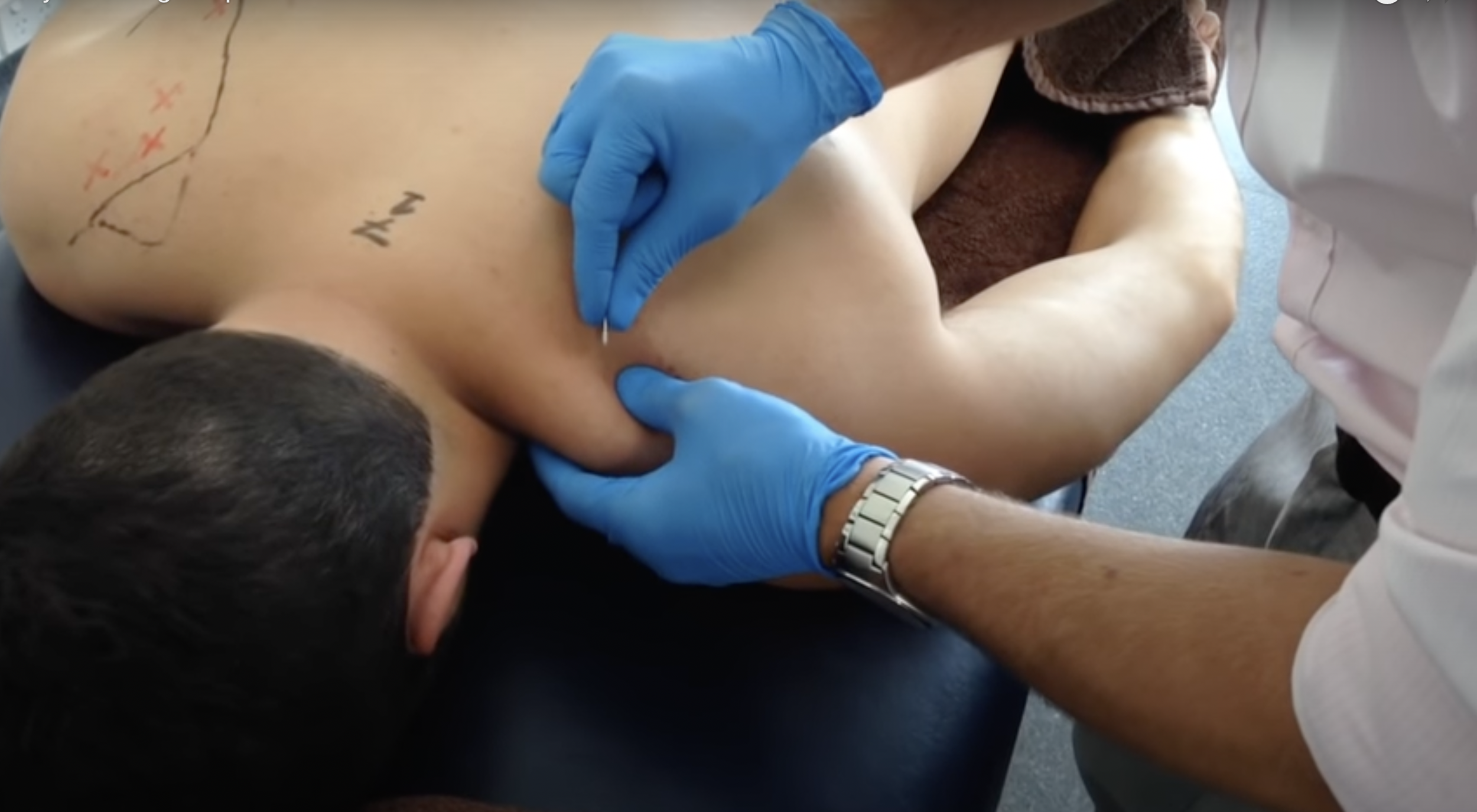
IMS / functional dry needling
Among the many tools in a clinician’s kit, Intramuscular Stimulation—often called functional dry needling—requires a particular kind of discipline. It is not simply about inserting needles; it’s about timing, precision, and a deep understanding of the terrain beneath the skin.
IMS uses a fine, acupuncture-style needle to reach into specific trigger points within the muscle. These are areas of tension, dysfunction, or chronic guarding—knots where the body holds onto effort long after the effort has passed. The goal is to provoke a neuromuscular reset, a release that restores proper tone and function.
But the needle alone doesn’t heal. It’s the assessment—the careful mapping of pain patterns, the analysis of movement, and the understanding of history—that tells us whether this technique is appropriate. At our clinic in Vancouver’s Mount Pleasant, our physiotherapists carry both the training and the judgment to use IMS when it’s truly warranted.
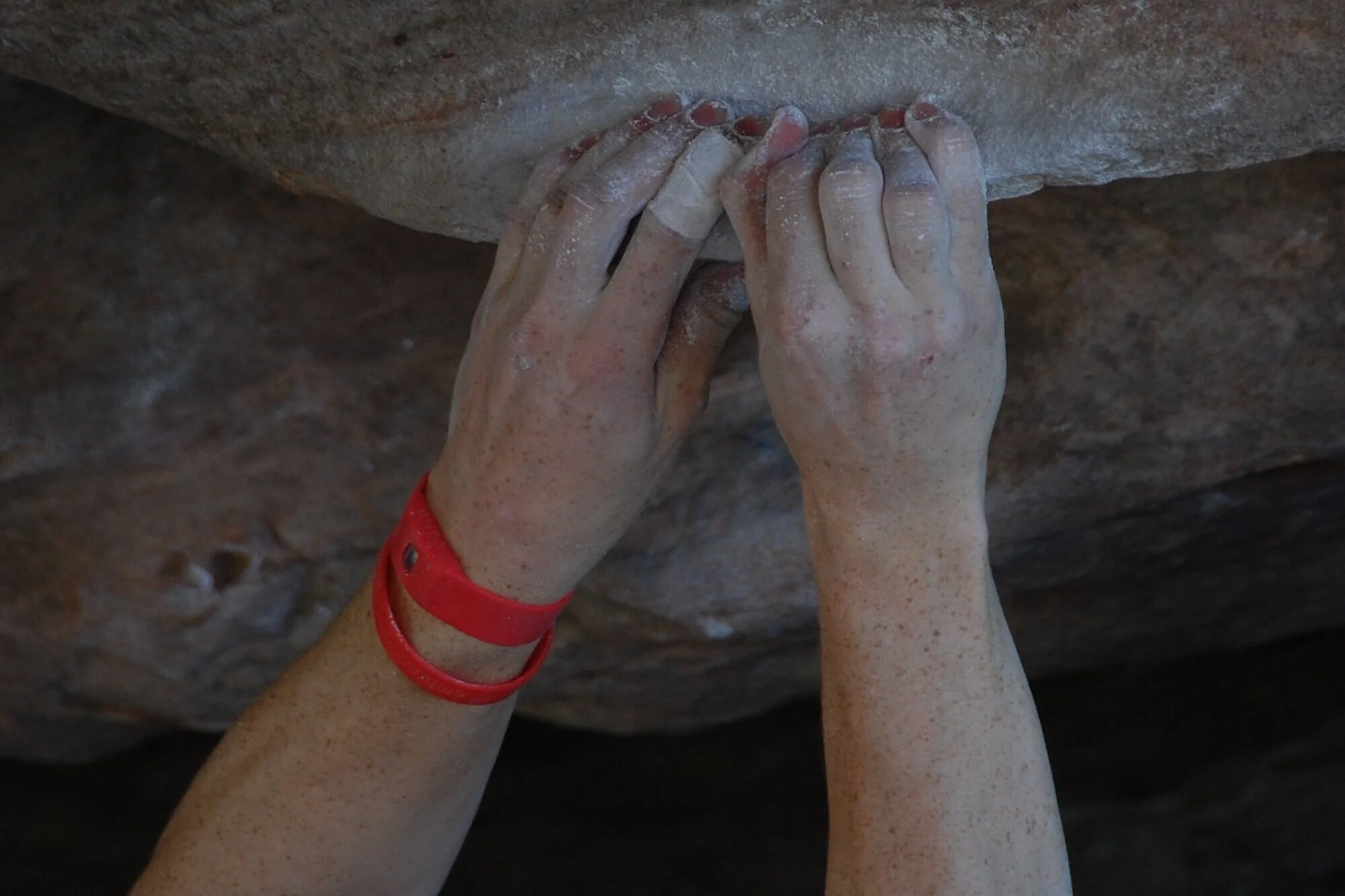
It’s not the flashiest technique. But in the right moment, it’s as effective and quiet as a well-placed piton—direct, unobtrusive, and exactly what’s needed to move forward.
do I need IMS?
IMS is not a blanket solution. Like any effective intervention, its value lies in context. It is chosen not for its popularity, but for its precision—applied only when the body’s presentation calls for it, and when other approaches have been carefully considered. Often, it is just one part of a broader treatment strategy, working in concert with manual therapy, targeted movement, and deliberate rehabilitation.
There are times when IMS is not the first tool a practitioner reaches for—and rightly so. No single method holds all the answers. In our practice, we value discernment over default, and choose the path that best serves the recovery, not the trend.

can I change my mind?
Discomfort is often part of the process. The needle may provoke a sharp twitch, a dull ache, or a lingering soreness that lasts a day or two. These sensations are not unexpected—they are signs the muscle has responded, that something long-held may finally be letting go. But even so, this work is never forced.
At every stage, you retain the right to pause, to ask questions, to change course. The choice to continue—like any decision in uncertain terrain—is yours alone. If the sensation becomes too much, or if another path feels better suited to where you are, we adjust. We listen.
Healing, like climbing, requires agency. And we’re here to move with you, not push past your limits.
can I see it?
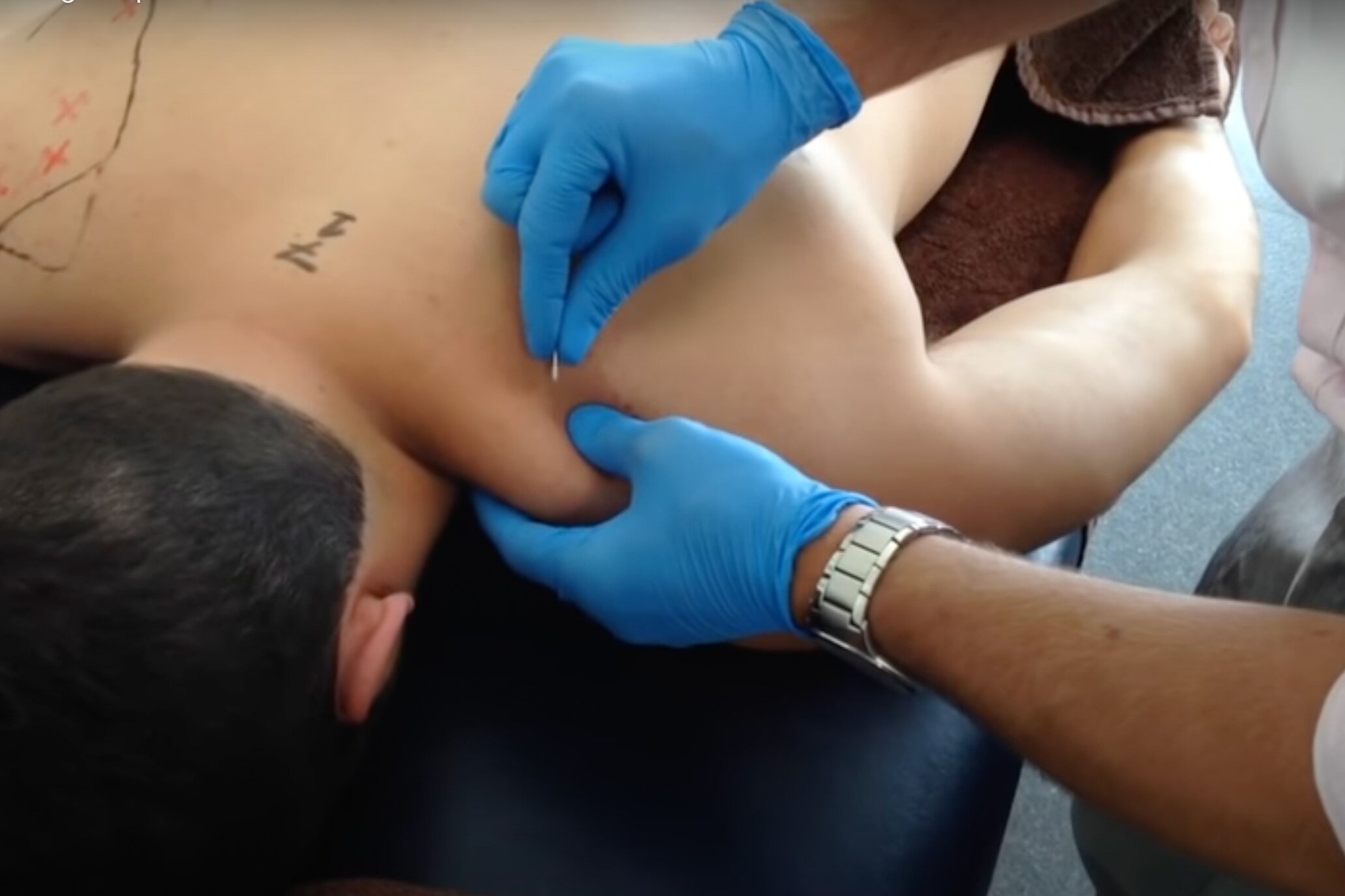
For those interested in a closer look at the process, we invite you to view the video below featuring Clinical Myotherapist and PhD candidate Tim Trevail. In it, you’ll see the application of IMS to the trapezius—demonstrating both the precision of the technique and the care required to perform it safely.
This video is also included on the Physiopedia Dry Needling resource page, where the anatomy and underlying mechanisms are discussed in greater detail. It’s a useful reference for those who appreciate understanding the “why” behind the practice.
If you have further questions, please contact us.
a skilled practitioner will explain:
what IMS/dry-needling is
what to expect before, during and after treatment
why it could be appropriate for you
the benefits, the risks, and your options
how the process works
any instructions for what other treatments or exercises are necessary
WATCH: dry needling / IMS
performed by Tim Trevail