
adventure blog
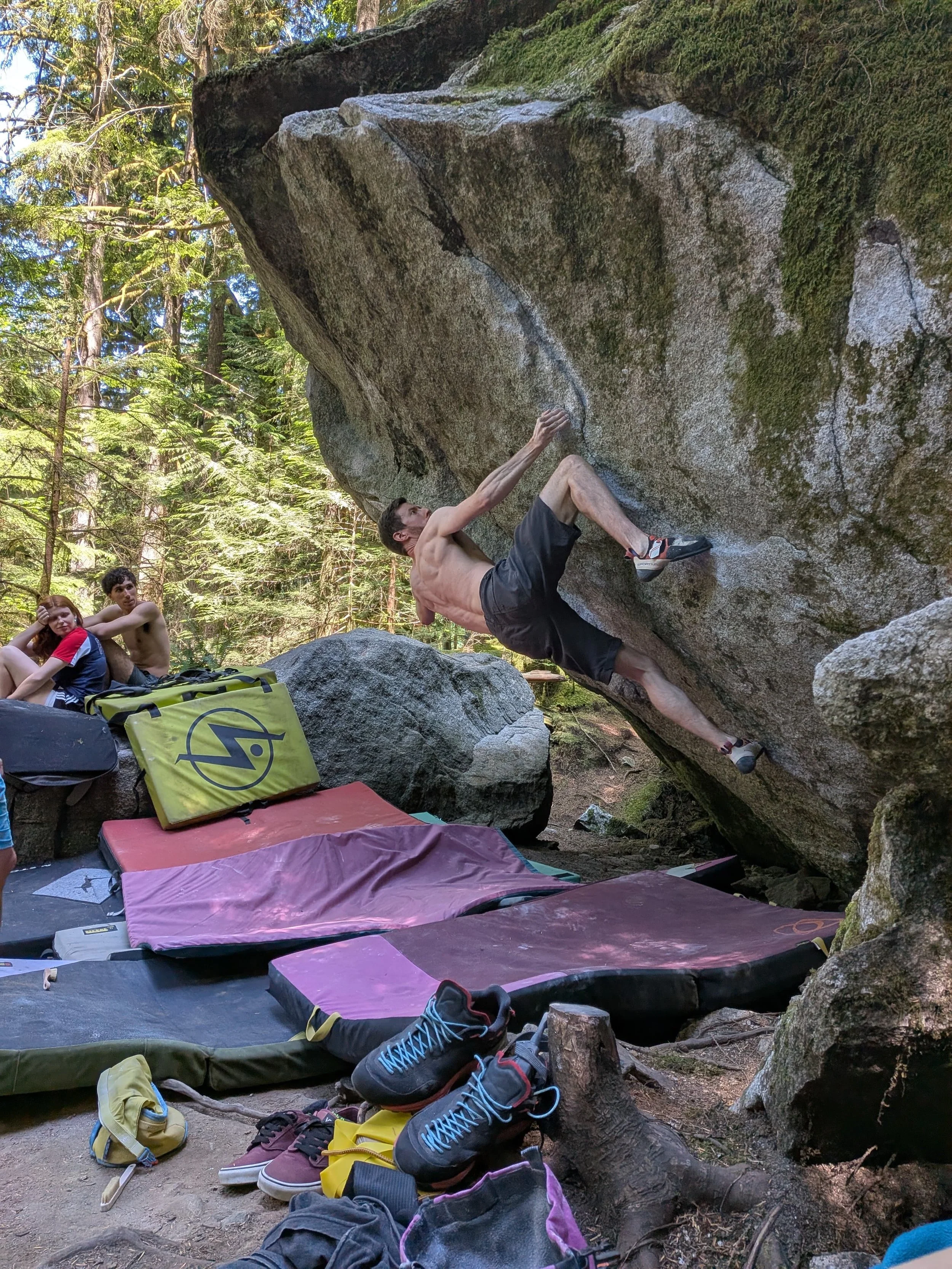
Send Report: Cradle Robber (V8)
Some projects take strength. Others just demand that you stop doing the wrong thing.
I finally managed to put together an ascent of Cradle Robber (V8) in the Magic Kingdom area of the N Wall Boulders on the Stawamus Chief in Squamish. It was one of those crisp June days where the granite felt sticky, the clouds were mostly elsewhere, and there was one less excuse for not sending.
Recovery Is Part of the Ascent… An Elios Health Perspective
In climbing, injury is rarely a single catastrophic moment. More often, it is a whisper that grows louder — a tendon that stiffens in the cold, a shoulder that hesitates under compression, an elbow that protests on the redpoint burn.
These setbacks can feel like exile. But they are not an ending.
They are an invitation to pay attention.
At Elios Health, we see recovery not as retreat, but as refinement. Registered Massage Therapy (RMT) becomes part of that process — a deliberate return to tissue quality, joint motion, and nervous system calm. It is hands-on work grounded in anatomy and informed by the demands of steep limestone, granite cracks, and long belays under coastal skies.
RMT addresses what climbing asks of the body. It reduces the simmer of inflammation in overloaded tendons. It restores glide to forearms braced in crimp. It coaxes rotation back into thoracic spines stiffened by hours on the wall. It creates space — not only in tissue, but in the mind of an athlete who has begun to doubt their durability.

What are Pulley Injuries?
Pulley injuries are the most common type of finger injuries among rock climbers. To minimize the impact of a pulley injury on your climbing goals, it is important to understand the anatomy of the pulley system, the mechanism of injury, and how to prevent and treat finger injuries.

3 signs of shoulder instability in climbing
Every climber understands that having strong shoulders is crucial. Many climbers focus on strengthening the larger, mobilizing muscles of the shoulder with exercises such as push-ups, pull-ups, and shoulder press; but neglect rotator cuff muscles that stabilize the joint.