
adventure blog
Recovery Is Part of the Ascent… An Elios Health Perspective
In climbing, injury is rarely a single catastrophic moment. More often, it is a whisper that grows louder — a tendon that stiffens in the cold, a shoulder that hesitates under compression, an elbow that protests on the redpoint burn.
These setbacks can feel like exile. But they are not an ending.
They are an invitation to pay attention.
At Elios Health, we see recovery not as retreat, but as refinement. Registered Massage Therapy (RMT) becomes part of that process — a deliberate return to tissue quality, joint motion, and nervous system calm. It is hands-on work grounded in anatomy and informed by the demands of steep limestone, granite cracks, and long belays under coastal skies.
RMT addresses what climbing asks of the body. It reduces the simmer of inflammation in overloaded tendons. It restores glide to forearms braced in crimp. It coaxes rotation back into thoracic spines stiffened by hours on the wall. It creates space — not only in tissue, but in the mind of an athlete who has begun to doubt their durability.
Love Your Shoulders: Improving Overhead Mobility
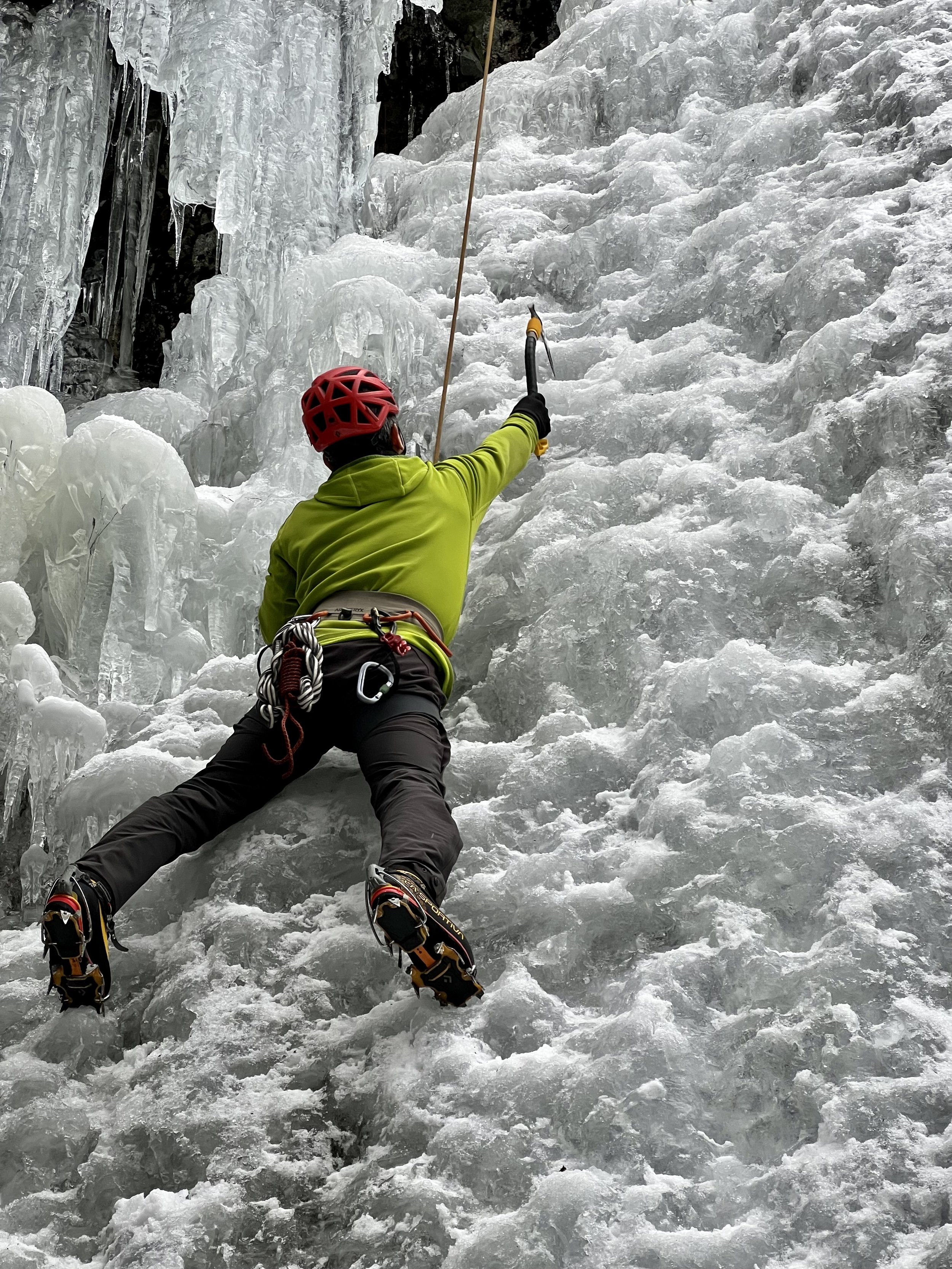
Overhead mobility can be explained simply as having adequate motion to allow the arms to be positioned overhead without compensation. Shoulder overhead mobility requires multiple moving body parts working together. Without adequate motion in the right muscles and joints, you run the risk of exposing other body regions to excessive strain due to compensatory strategies, for example, extreme extension through the neck, thoracic spine, or lumbar spine.

What’s Trigger Finger? (Stenosing Tenosynovitis)
Trigger finger is a condition where there is a size disparity between the flexor tendons and the surrounding pulley system at the first annular pulley (the A1 pulley). This causes the tendon to catch on the pulley as it attempts to glide through unless enough pressure is developed to allow it to forcefully move through the pulley. The exact cause of trigger finger is not always clear, but it is often attributed to overuse injuries or repetitive motions.

Prevention and Treatment of “Belayer’s Neck”
Belayer’s neck is a term climbers use to describe pain and stiffness in the back of the neck that occurs as a result of looking upwards and belaying for long periods of time. The term belayer’s neck isn’t a single diagnosis, but rather a colloquial term used to describe a wide range of conditions that cause the symptoms belayers often experience at the back of their necks.